Responsible Gambling Guide: Playing Safely Online
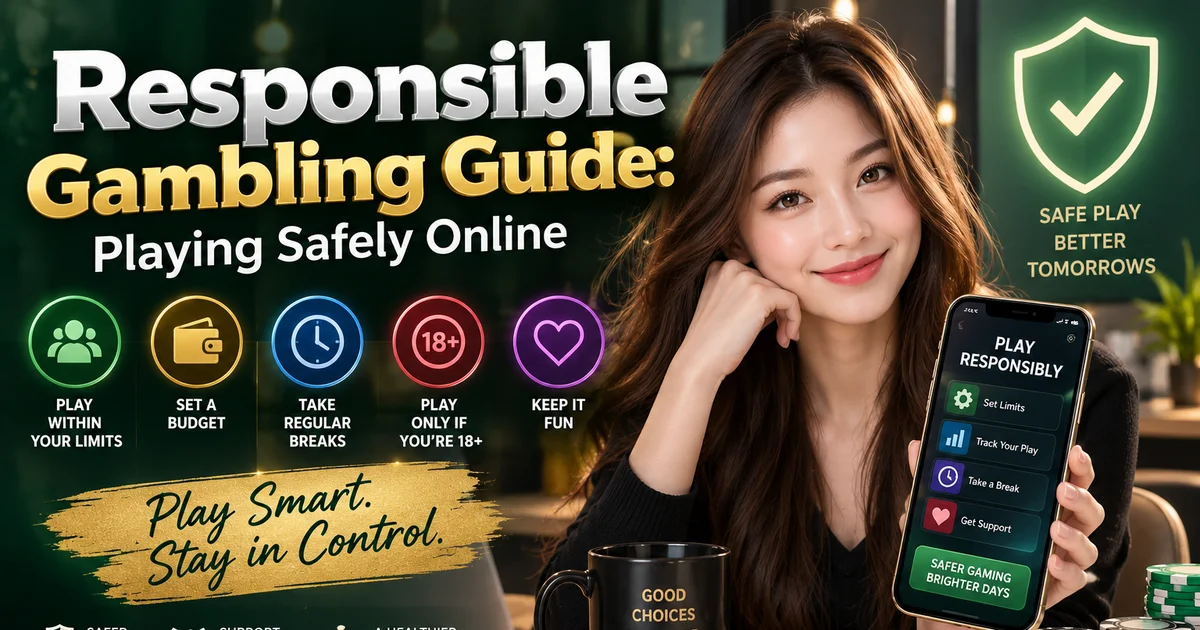
Slot games and casino games are built to be entertaining — and, over time, mathematically favour the platform. Keeping gambling firmly in the "entertainment" column, rather than letting it become a financial strategy, comes down to a handful of practical habits. Here's a practical guide to playing safely online.
Key Takeaways
- Gambling involves genuine financial risk and should be treated strictly as entertainment.
- Setting a budget and time limit before you play is the single most effective control.
- Chasing losses by increasing bets is one of the clearest warning signs of a developing problem.
- Support resources exist if gambling starts to feel out of control — reaching out early helps.
Start With the Right Mindset
Every form of gambling, including online slots and casino games, is designed with a built-in mathematical edge in the platform's favour over the long run — a concept explained in our RTP guide. This doesn't mean individual sessions can't be enjoyable or occasionally profitable, but it does mean gambling should never be approached as a reliable way to make money.
Setting Limits Before You Start
Budget Limits
Decide, before you open any game, exactly how much money you're comfortable losing in that session — and treat that figure as a hard stop, not a starting point for "just a bit more."
Time Limits
Gambling sessions can extend longer than intended, especially with fast-paced slot games. Setting a time limit in advance, and using a phone timer or alarm if needed, helps keep sessions bounded.
Loss Limits, Not Win Targets
A loss limit (the maximum you're willing to lose) is a more reliable safeguard than a win target, since chasing a specific win amount often leads to prolonged, escalating play.
Recognising Warning Signs
Problem gambling can develop gradually and affect anyone. Common warning signs include:
- Spending more money or time than you originally planned
- Feeling a growing need to bet larger amounts for the same excitement
- Chasing losses by increasing bets to try to "win back" money
- Lying to friends or family about how much you gamble
- Borrowing money, or using funds meant for essential expenses, to gamble
- Feeling irritable, anxious or restless when trying to cut back
- Gambling starting to interfere with work, study or relationships
Practical Habits That Help
- Only gamble with money you can genuinely afford to lose — never rent, bills or borrowed funds.
- Take regular breaks, especially during longer sessions.
- Avoid gambling while stressed, upset, or under the influence of alcohol.
- Keep gambling activity separate from your everyday finances, so it's easy to track.
- Talk openly with someone you trust if gambling starts to feel like more than entertainment.
Where to Get Support
If gambling is affecting your life, speaking to a healthcare professional, counsellor, or a trusted support service is a genuinely helpful first step. In Malaysia, general emotional support services such as Befrienders KL (befrienders.org.my) offer confidential support for people experiencing distress, including from financial or gambling-related pressure, even though they are not a gambling-specific service. Dedicated problem-gambling helplines vary by country and can change, so we recommend searching for a current, local service, or starting with your general practitioner.
For more on setting limits before you even create an account, see our Responsible Gambling page.
Frequently Asked Questions
How do I know if my gambling has become a problem?
Warning signs include spending more than planned, chasing losses, lying about the extent of your gambling, borrowing money to gamble, or feeling unable to stop despite wanting to. If any of these feel familiar, consider reaching out for support.
Is it normal to lose money gambling?
Yes. Because most gambling activities, including slots, carry a built-in mathematical edge in the platform's favour over time, losing is a normal and expected part of gambling, which is why it should be treated strictly as entertainment with a fixed budget.
Can I set my own deposit or loss limits on a gambling platform?
Many platforms offer account-level limit-setting tools; availability varies and should be confirmed directly with the specific platform you're using.
Where can I find help in Malaysia if I'm worried about my gambling?
Consider speaking with a healthcare professional or counsellor, or a general emotional support service such as Befrienders KL. Dedicated gambling-specific support resources vary and are worth researching for your specific area.
Conclusion
Responsible gambling isn't about avoiding gambling entirely — it's about keeping it firmly within the bounds of entertainment: a fixed budget, a fixed time limit, and honest self-awareness about how it's affecting you. If it stops being fun, that's a clear signal to step back and, if needed, seek support.